
Is sourdough bread truly safe for coeliacs, even if it's labelled gluten-free?
Asked by Melissa H. · 3 weeks ago

Is sourdough bread truly safe for coeliacs, even if it's labelled gluten-free?
I've seen a lot of artisan bakeries and even supermarkets selling sourdough that's labelled "gluten-free." Some people say the long fermentation process breaks down the gluten and makes it safe. Others say it's completely unsafe. I've been newly diagnosed with celiac disease and I'm genuinely confused. Can someone please give me a definitive, medical answer?
I want to understand: (1) Is traditional sourdough ever safe? (2) If a sourdough is made from certified GF flours, is it actually OK? (3) What should I look for on the label?
The Short Answer: Traditional Sourdough Is Not Safe for Coeliacs.
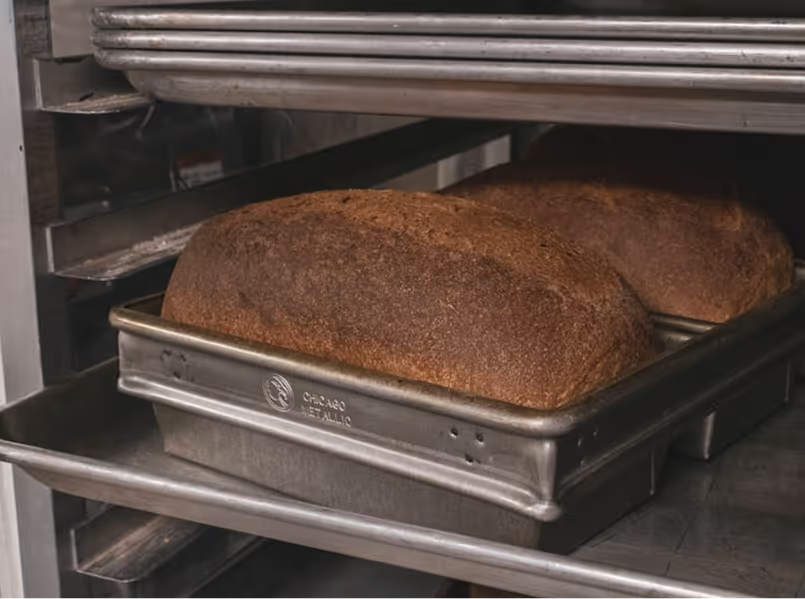
Let me be unequivocal here, because this is a question where misinformation can cause real harm. Traditional sourdough bread — made from wheat, rye, or barley — is not safe for people with celiac disease, regardless of how long the fermentation process runs. While it's true that the Lactobacillus bacteria in sourdough starter partially degrade gluten proteins during fermentation, the key word is partially. The remaining gluten fragments are still sufficient to trigger an immune response in a celiac patient, causing intestinal damage at levels well below the threshold you'd consciously feel.
Clinical Note — The 20ppm Rule
Codex Alimentarius and EU regulation 41/2009 define "gluten-free" as containing less than 20 parts per million (ppm) of gluten. Studies measuring gluten in fermented sourdoughs have found residual levels ranging from 200ppm to over 2,000ppm — far above the safe threshold for a celiac patient. Fermentation alone cannot guarantee safety.
What About Certified GF Sourdough?
This is where it gets more nuanced. A sourdough made from certified gluten-free flours — such as pure buckwheat, brown rice, sorghum, or teff — in a dedicated gluten-free facility can be genuinely safe. Some excellent certified GF sourdoughs exist. But here's the catch: you cannot rely on a product being "sourdough-style" as a proxy for safety. You need to verify:
The product carries a recognised third-party certification mark (Coeliac UK's crossed grain symbol, GFFS in Ireland, or GFCO in North America).
The manufacturer can confirm it's produced in a dedicated GF facility — not just on a 'cleaned' shared line.
The base flours are inherently GF (buckwheat, rice, sorghum, teff, cassava). If it lists 'wheat flour' anywhere, it is not safe.
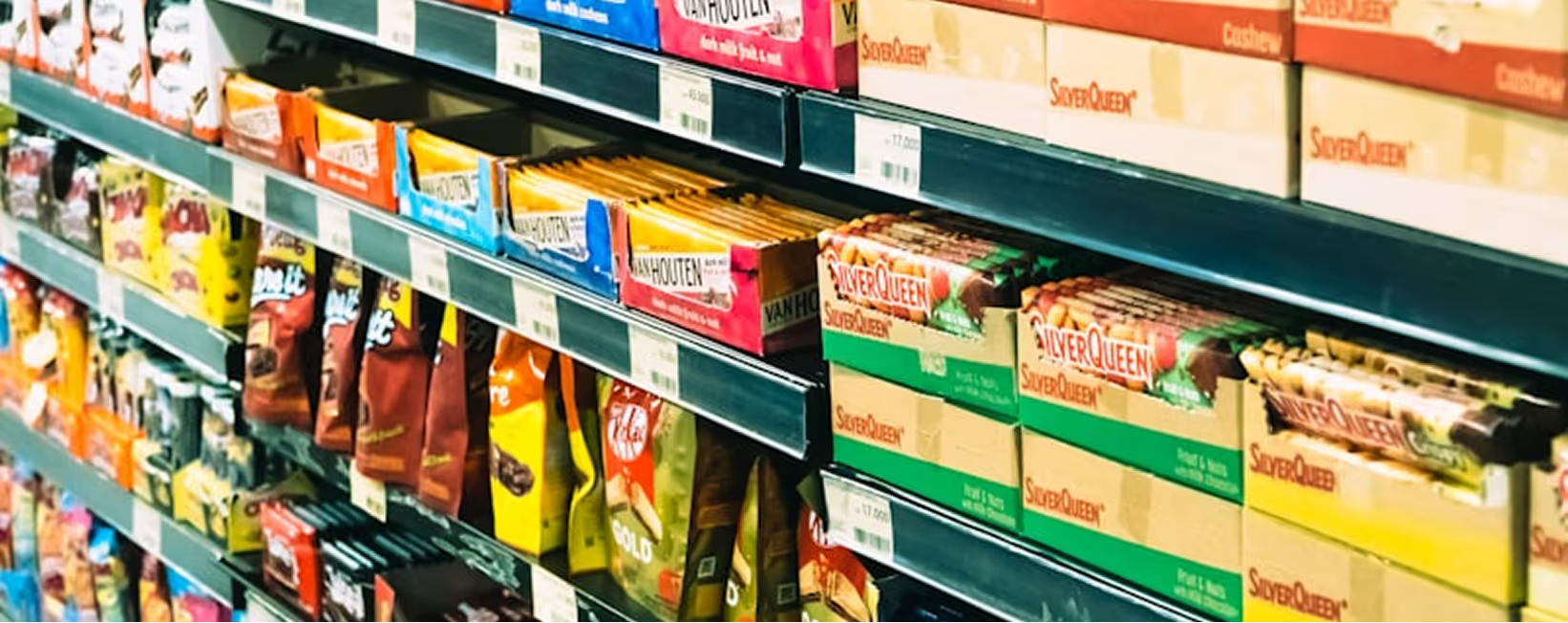
What to Look for on the Label
In practical terms, here's my checklist for any bread product — sourdough or not:
My clinical recommendation: For a newly diagnosed coeliac, I always advise sticking to well-known, established certified GF brands while you get to grips with label reading. BFree's products are made in a dedicated GF facility and carry third-party certification — that's exactly the kind of assurance you need. As you become more confident, you can explore specialist GF bakeries, but always verify their certification first.
Community Questions (3)
I've been celiac for 12 years and this is something I learned the hard way. I once ate a 'gluten-free sourdough' from a lovely artisan bakery and was genuinely floored for three days. The baker insisted it was safe because of the fermentation process. It wasn't. Always check for third-party certification, not just the baker's word.
Read more →I've been celiac for 12 years and this is something I learned the hard way. I once ate a 'gluten-free sourdough' from a lovely artisan bakery and was genuinely floored for three days. The baker insisted it was safe because of the fermentation process. It wasn't. Always check for third-party certification, not just the baker's word.
Read more →I've been celiac for 12 years and this is something I learned the hard way. I once ate a 'gluten-free sourdough' from a lovely artisan bakery and was genuinely floored for three days. The baker insisted it was safe because of the fermentation process. It wasn't. Always check for third-party certification, not just the baker's word.
Read more →